Palazzo Pitti and the Boboli Gardens: A Half-Day on the South Bank
How to visit Palazzo Pitti and the Boboli Gardens: which museums are inside, combined tickets, the best route through the garden, and when to go.
Editorial guide · Updated 2026-10-24
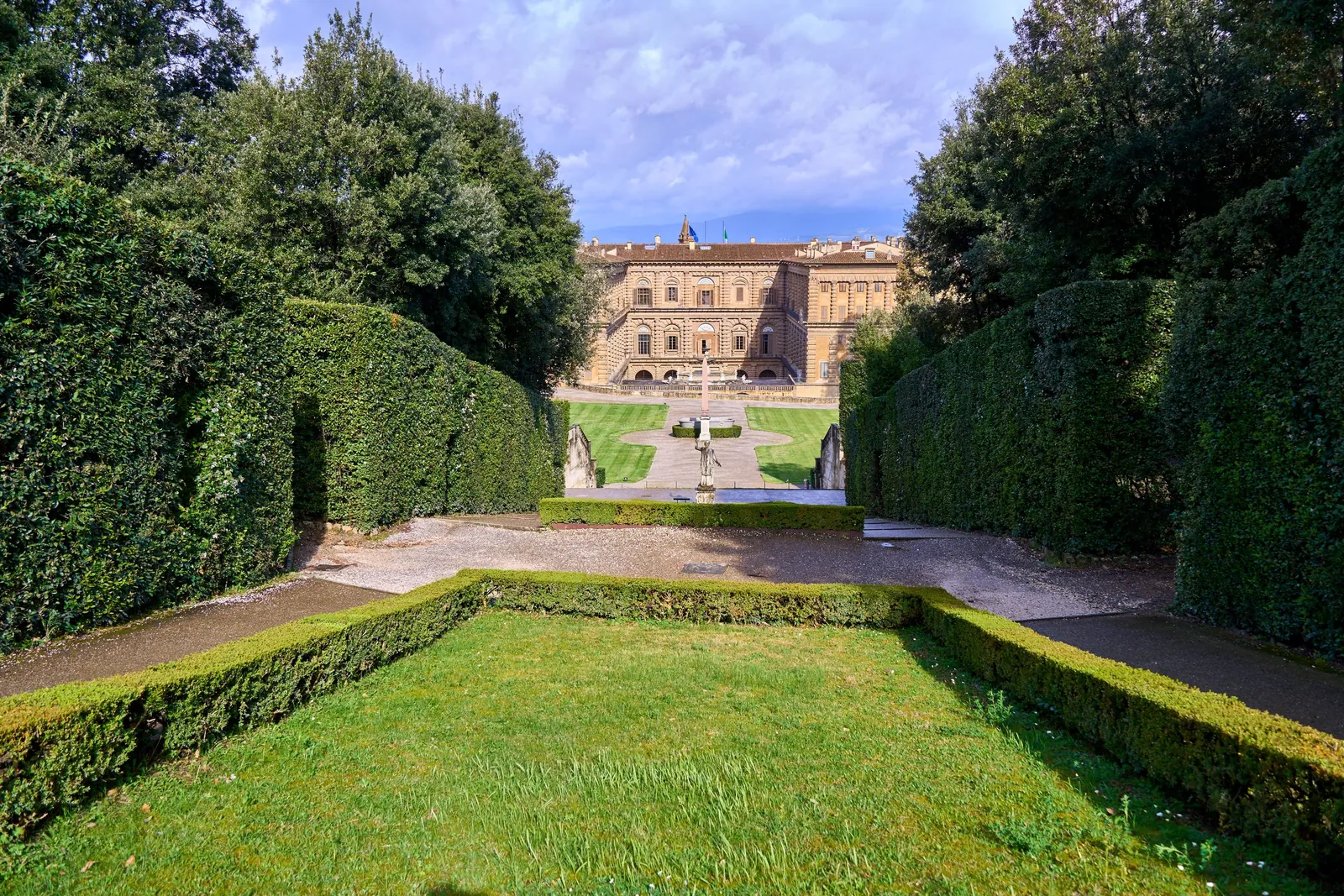
The Medici bought Palazzo Pitti in 1550, when Eleonora of Toledo, wife of Duke Cosimo I, wanted a grander home than Palazzo Vecchio. The family moved in, extended it, and laid out the Boboli Gardens on the hillside behind. Today the palace holds several museums and the garden is the largest green space in the historic centre.
Inside the palace
Palazzo Pitti is part of the Uffizi Galleries. Under one roof:
- The Palatine Gallery, on the first floor: paintings hung frame to frame in the way the Medici and their successors displayed them, including some of the best Raphaels and Titians anywhere.
- The Royal Apartments, used by the House of Savoy when Florence was briefly Italy's capital in the 1860s.
- The Gallery of Modern Art, mostly 19th-century Italian painting, including the Macchiaioli, Tuscany's answer to Impressionism.
- The Treasury of the Grand Dukes on the ground floor, with the Medici's jewels, cameos and curiosities.
- The Museum of Fashion and Costume, which reopens and rotates its displays; check what is open.
Most visitors pick the Palatine Gallery and one other section. Two hours is enough.
The Boboli Gardens
The garden climbs from the back of the palace up the hill towards Forte Belvedere. It is bigger and steeper than it looks from the courtyard.
A route through the garden
- Start at the amphitheatre directly behind the palace, a horseshoe of stone seats around an Egyptian obelisk.
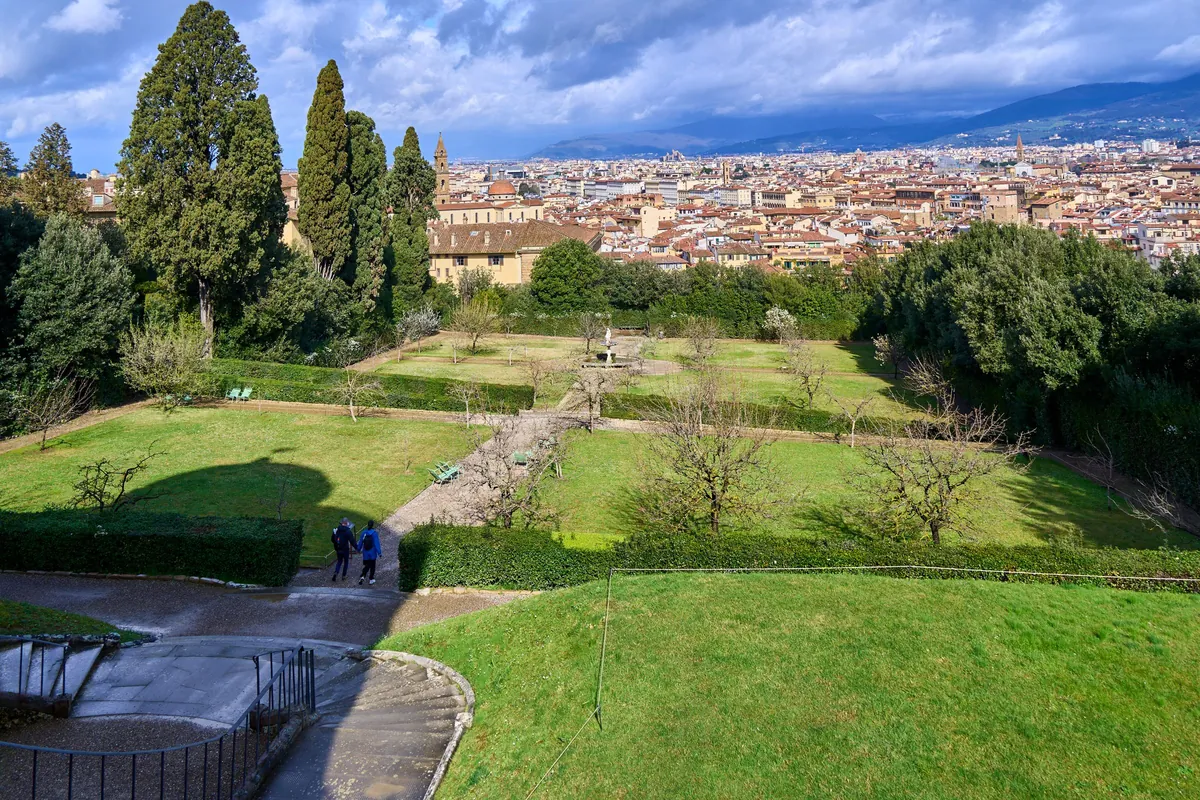
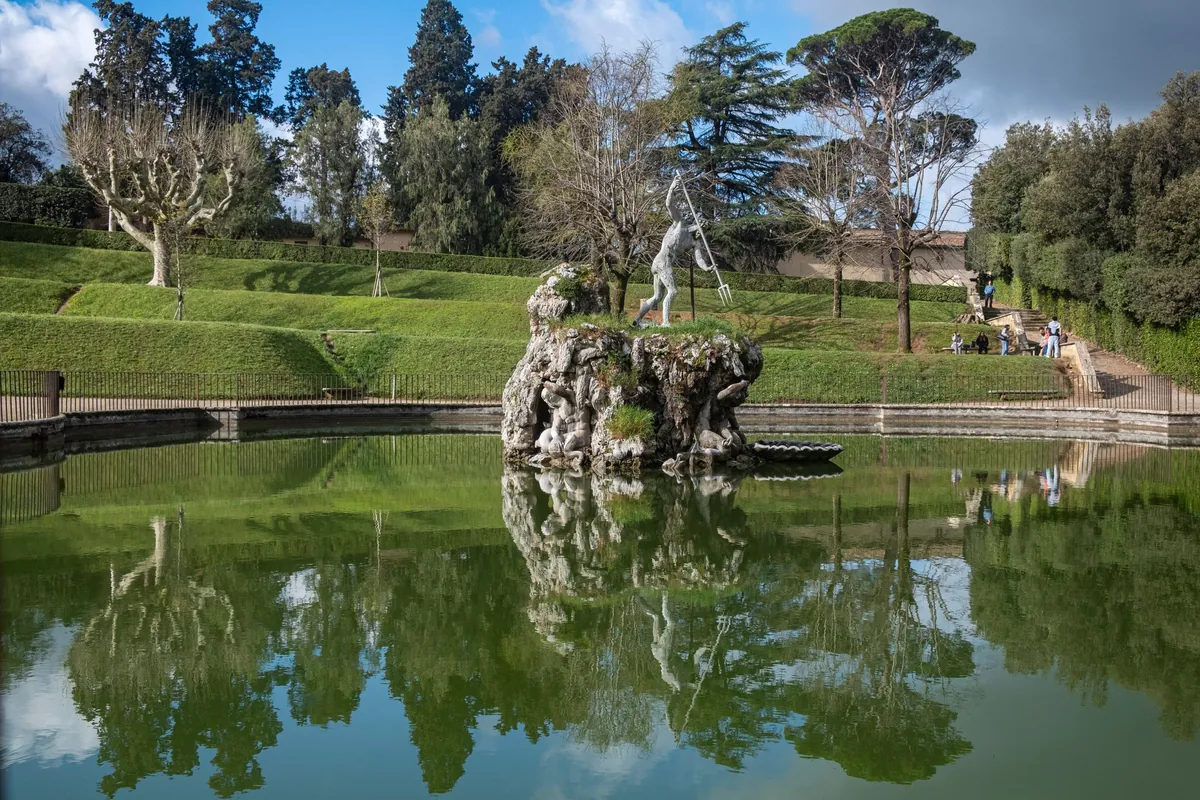
- Climb past the Neptune Fountain to the top of the main axis for the view back over the palace roofs to the city.
- Head to the Kaffeehaus area and the upper terraces for wider views over the hills.
- Walk down the long cypress avenue, the Viottolone, lined with statues, to the Isolotto, an island pool with a fountain at its centre.
- On the way out, find the Buontalenti Grotto near the exit by the palace, a fantasy cave of artificial stalactites and statues.
When to go
Morning in summer, before the heat on the exposed gravel paths. Spring is the most beautiful season. Bring water; there is little shade on the upper levels.
Tickets
Palazzo Pitti and Boboli are sold separately, as a combined ticket, and as part of a multi-day ticket that also covers the Uffizi. In 2026 the official Coopculture listing showed a combined Pitti and Boboli ticket and a multi-day Uffizi, Pitti and Boboli ticket; check current prices and closing days on the Uffizi Galleries site before you go. Pitti closes on Mondays.
Nearby
- Bardini Garden, a ten-minute walk east along the hill, is smaller, quieter and has an even better view of the city. A different ticket.
- Piazza Pitti itself, the sloping square in front of the palace, is a good place to sit; there is a wine bar opposite.
- Santo Spirito is five minutes away for lunch or a drink afterwards.
If you have the multi-day Uffizi Galleries ticket, Pitti and Boboli make a natural afternoon after a morning at the Uffizi, connected (for those with the booking) by the Vasari Corridor.
In pictures

Places mentioned in this guide
Tickets and tours
Partner links. We may earn a commission at no extra cost to you.
Frequently Asked Questions
Is the Boboli Gardens ticket separate from Palazzo Pitti?
Both are sold separately and as a combined ticket. There is also a multi-day ticket covering the Uffizi, Palazzo Pitti and Boboli. Check current options on the Uffizi Galleries site.
How long do you need for Boboli?
Two hours to walk the main axes without rushing. Add more if you want the upper garden and the views, or the porcelain museum when it reopens.
When are Palazzo Pitti and Boboli closed?
Palazzo Pitti closes on Mondays. Boboli's closing days have differed between sources, so check the official site before you go.