Ponte Vecchio and the Oltrarno: Crossing to Florence's Working Side
The story of Ponte Vecchio, the best times to see it, and a walk into the Oltrarno: Santo Spirito, San Frediano, artisans' workshops, wine windows and the Brancacci Chapel.
Editorial guide · Updated 2026-10-24
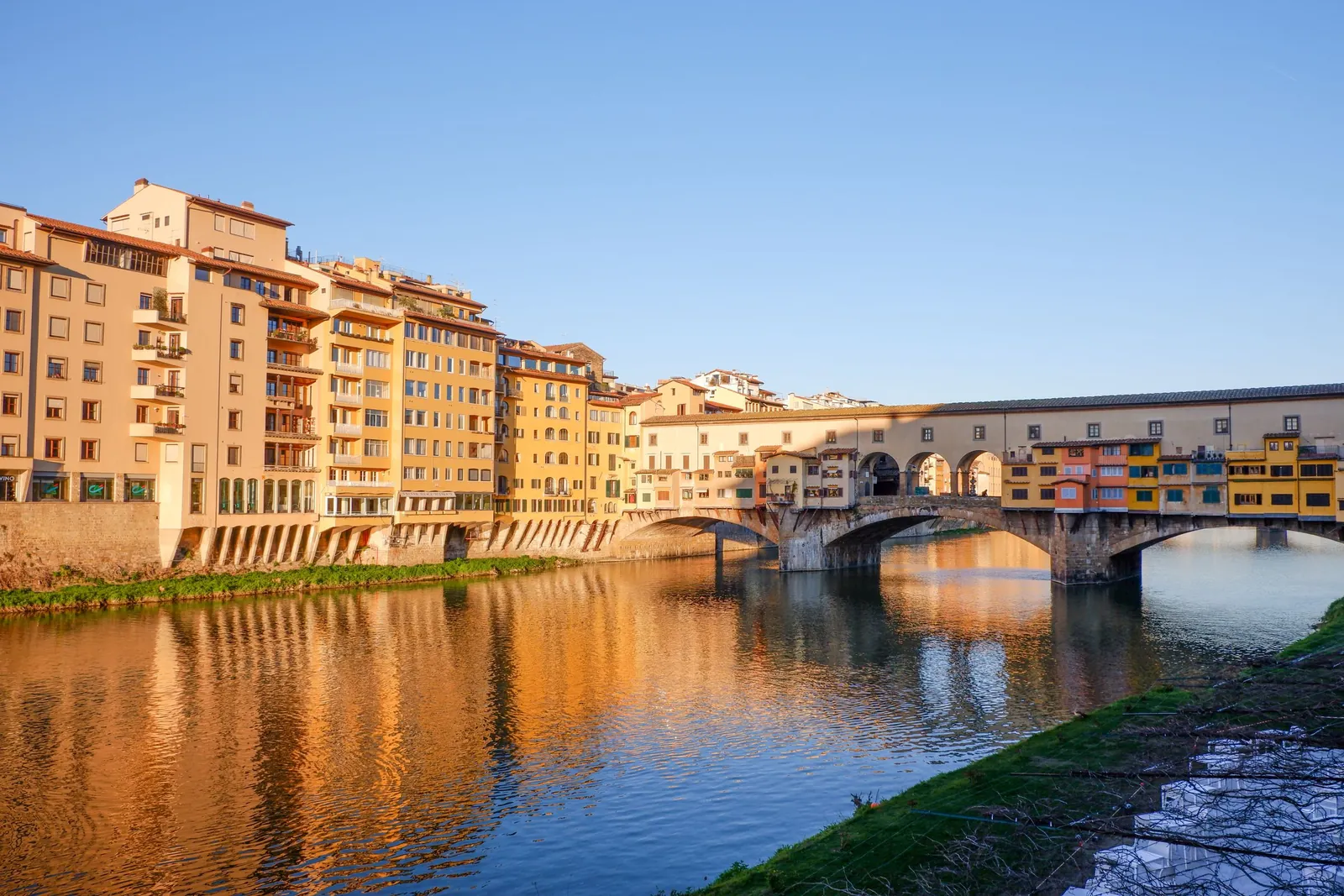
Ponte Vecchio is the postcard. The Oltrarno, the district it leads to, is where Florence still makes things. Crossing one to reach the other is the best short walk in the city.
The bridge
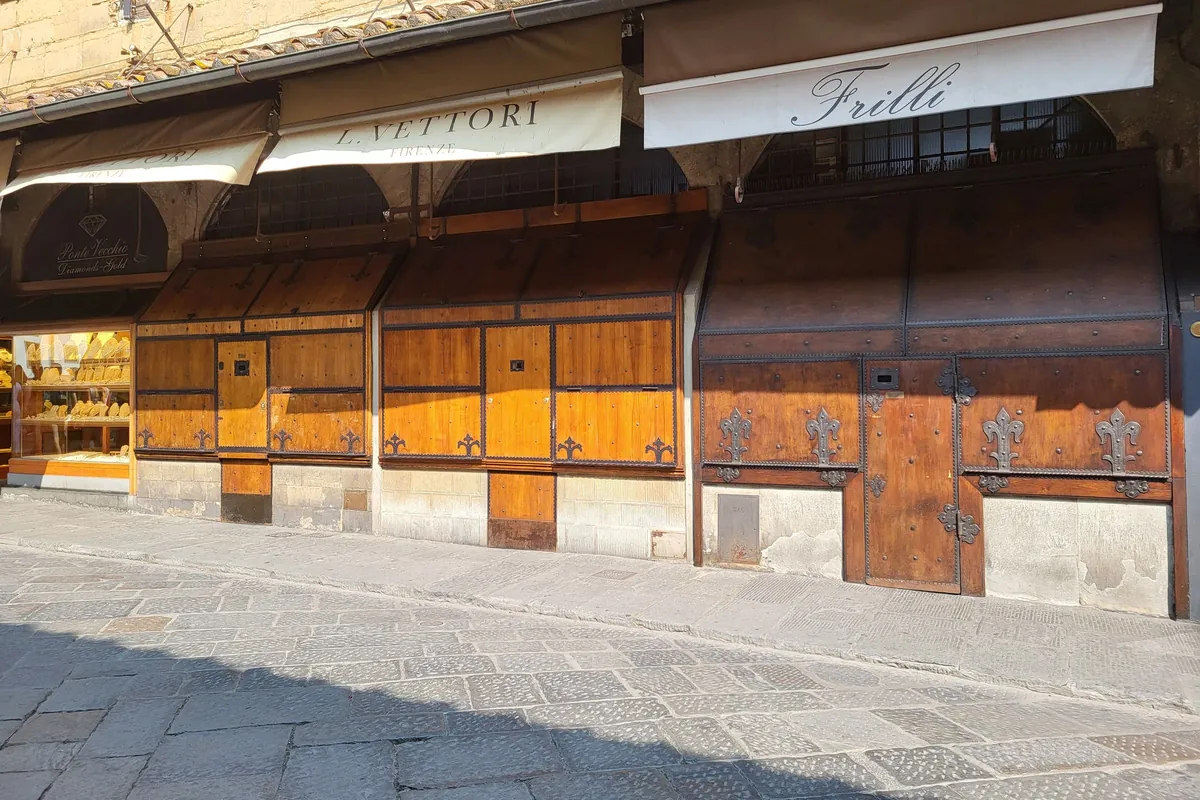
There has been a bridge here since Roman times; the present one dates from 1345. Shops have lined it for most of that time. Butchers and tanners worked here until 1593, when Grand Duke Ferdinando I replaced them with goldsmiths and jewellers, reportedly to get rid of the smell below the corridor the Medici used to walk between their palaces. Jewellers still hold the shops.
That corridor, the Vasari Corridor, runs along the top of the bridge's eastern side, linking the Uffizi to Palazzo Pitti. Giorgio Vasari built it in 1565. It reopened to visitors in December 2024 and can be booked through the Uffizi.
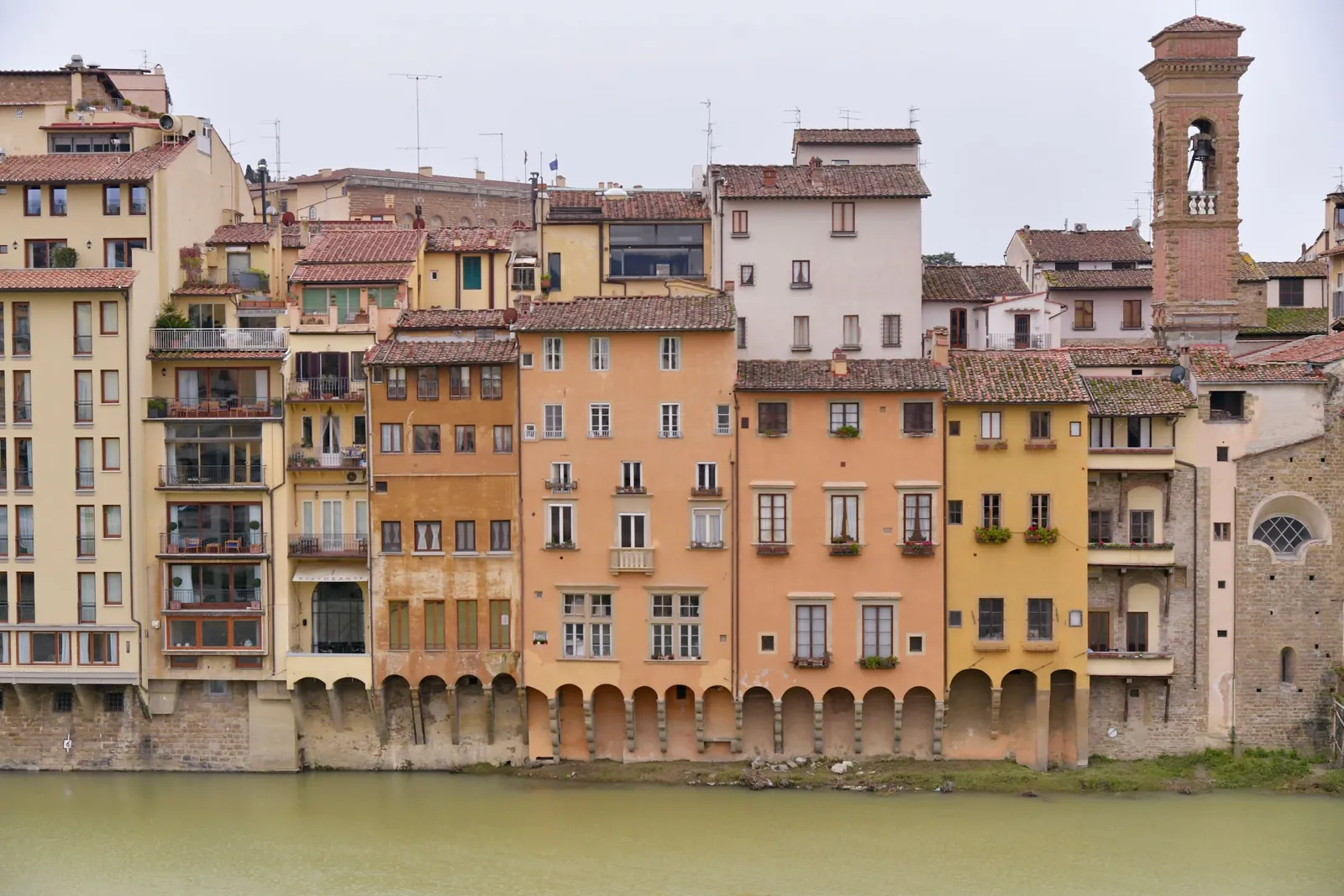
In August 1944 the retreating German army blew up every bridge in Florence except this one, destroying the medieval streets at either end instead. The buildings you see at the bridge approaches are mostly post-war reconstructions.
When to see it
- From the bridge: early morning, when the wooden shutters are still closed and the bridge is almost empty.
- Of the bridge: from Ponte Santa Trinita, the next bridge downstream, especially in late afternoon and at sunset. From the Uffizi's river corridor if you are inside the museum.
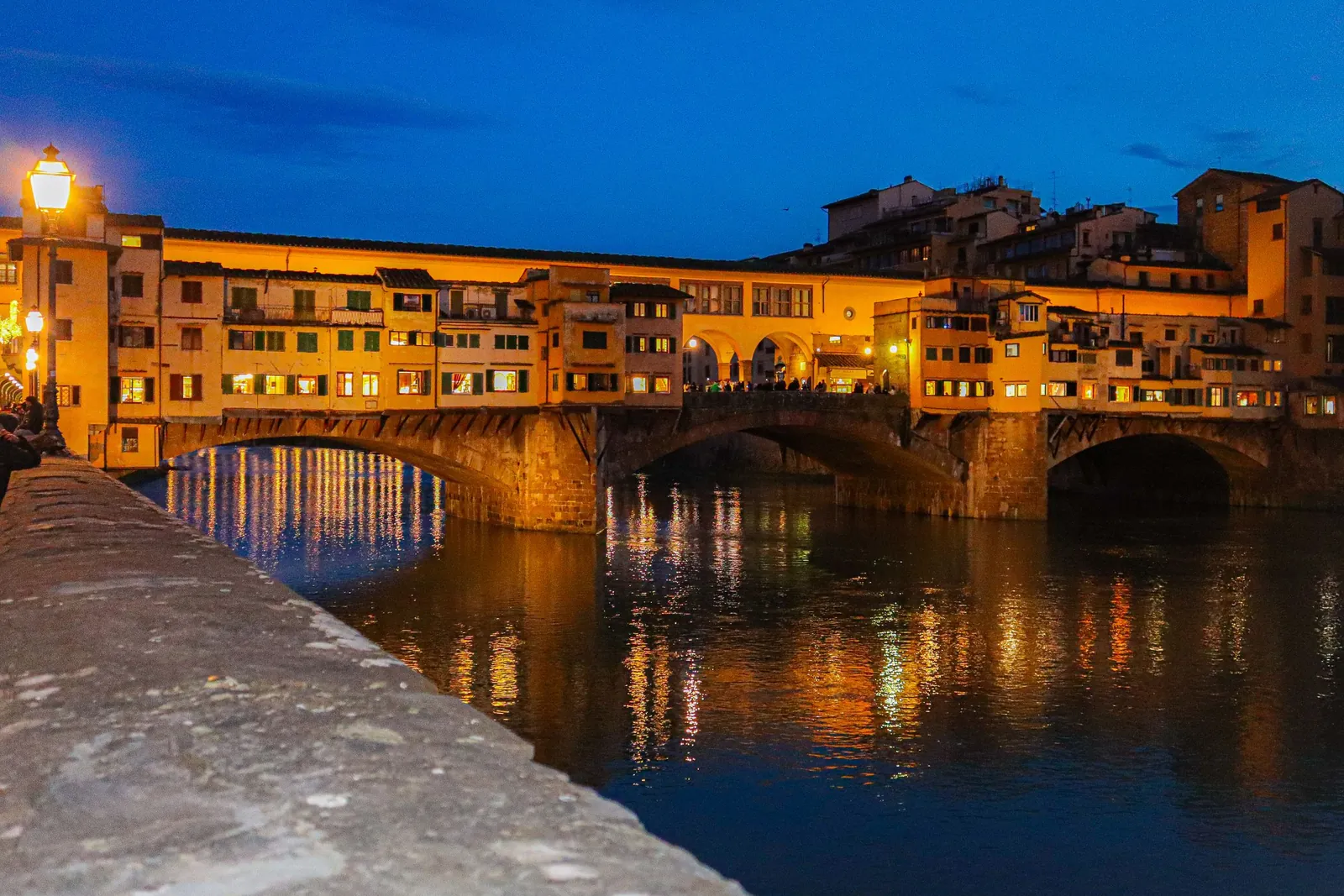
- At night: the shops are shut and the bridge is lit; it is a different, calmer place.
Into the Oltrarno
Cross the bridge and keep going. Within five minutes the souvenir shops give way to frame-makers, gilders, restorers, bookbinders and furniture workshops, many in the streets between Via Maggio and Via di Santo Spirito. Most are working shops, not showrooms. It is fine to look in; ask before photographing people at work.
Santo Spirito
Piazza Santo Spirito is the neighbourhood's living room. By day there is a small market; by night the steps of the church fill with people and drinks from the bars around the square. The church of Santo Spirito, designed by Brunelleschi, has a plain unfinished facade and one of the most harmonious interiors in Florence. A wooden crucifix attributed to the young Michelangelo hangs in the sacristy.
The Brancacci Chapel
In the church of Santa Maria del Carmine, the Brancacci Chapel holds Masaccio's frescoes from the 1420s, including the Expulsion from the Garden of Eden. Their solid, grieving figures changed painting. Visits are timed and small; book ahead.
San Frediano
West of Santo Spirito, San Frediano was a working-class quarter and keeps some of that feel. It is now one of the best areas in the city to eat and drink, with less tourist traffic. The old gate, Porta San Frediano, still stands at the end of Borgo San Frediano.
Wine windows
Look for small arched hatches at about chest height in the palace walls. These buchette del vino were used for centuries to sell wine directly from noble families' cellars. A few in the Oltrarno have reopened to serve wine or gelato. The Buchette del Vino association maps the survivors.
A walking route (2 to 3 hours)
- Ponte Vecchio early in the morning.
- Via Guicciardini towards Palazzo Pitti; look into the square in front of the palace.
- Via Maggio and the side streets for workshops.
- Piazza Santo Spirito; go inside the church.
- Santa Maria del Carmine for the Brancacci Chapel (booked).
- Borgo San Frediano to the old gate.
- Back along the river to Ponte Santa Trinita for the classic view of Ponte Vecchio.
Eating and drinking
The Oltrarno has some of the city's best tables at fair prices. See Il Santo Bevitore, Trattoria 4 Leoni, and the wine bars in our nightlife guide. Book for dinner; the good places are small.
In pictures
Places mentioned in this guide
Tickets and tours
Partner links. We may earn a commission at no extra cost to you.
Frequently Asked Questions
When is Ponte Vecchio least crowded?
Early in the morning, before the jewellers open, and late at night. From mid-morning to evening it is one of the most crowded places in the city.
What does Oltrarno mean?
Literally 'beyond the Arno': the part of Florence on the south bank of the river, including Santo Spirito, San Frediano, San Niccolò and Palazzo Pitti.
Can you walk the Vasari Corridor?
Yes, on a booked ticket from the Uffizi since the corridor reopened in December 2024. Places are limited; check the Uffizi site for the current price and conditions.