Gelato in Florence: How to Spot Good Gelato and Where to Find It
Florence's gelato: the Buontalenti story, how to tell real gelato from the show-off kind, and the gelaterie worth crossing town for, from Santa Croce to San Frediano.
Editorial guide · Updated 2026-10-25
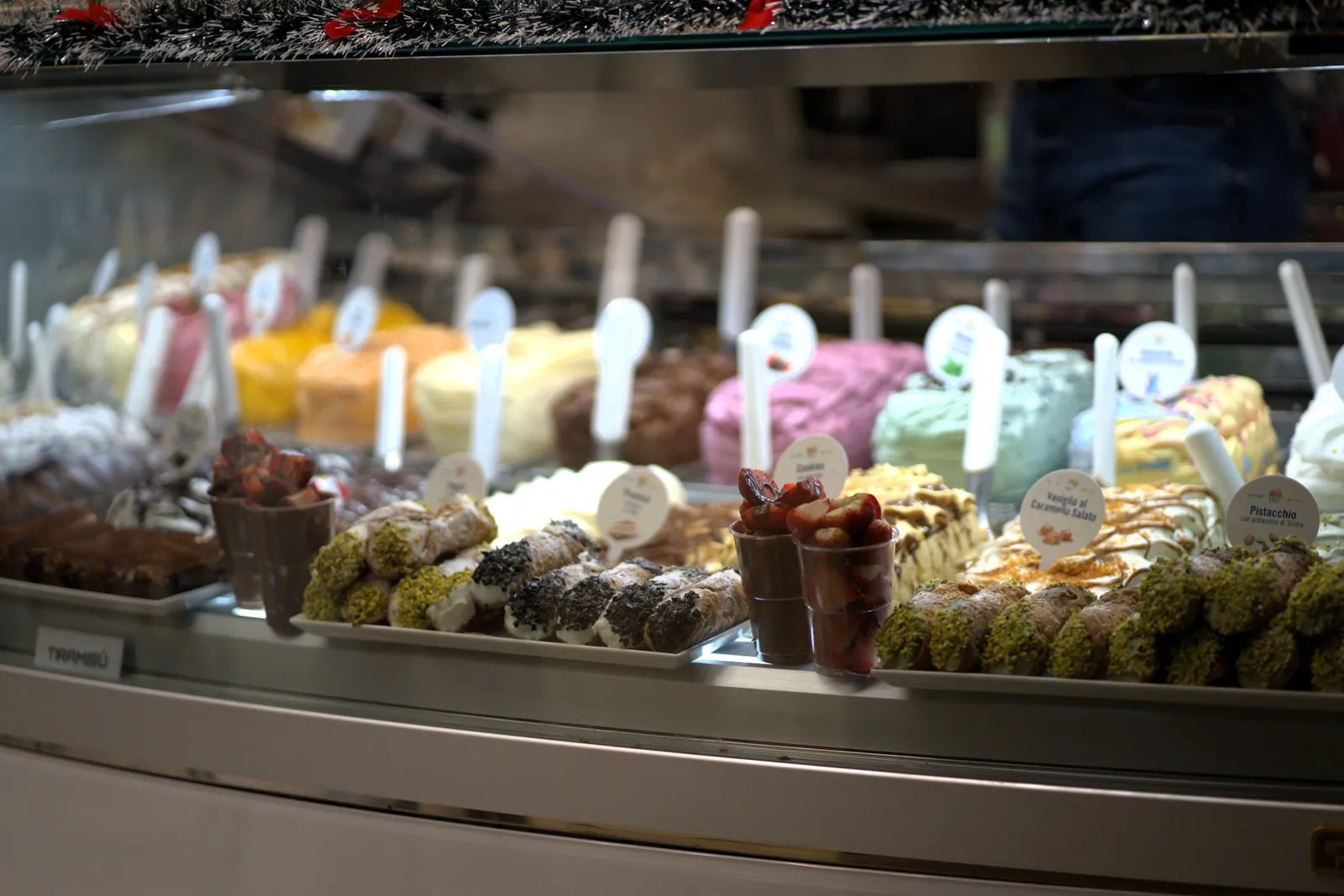
Gelato is everywhere in Florence, and a lot of it is not very good. The good news is that the best places are cheap, scattered across the city and easy to recognise once you know what to look for.
A Florentine invention, sort of
Florence claims gelato through Bernardo Buontalenti, the Medici's architect and stage designer, who is said to have served a frozen cream dessert at court in the 1500s. Ices and sorbets existed long before, but the story stuck, and many gelaterie still sell a flavour called crema Buontalenti, a rich egg-and-cream base.
How to spot good gelato
- Colour: natural ingredients produce muted colours. Bright green pistachio and neon yellow banana are made with colourings.
- Shape: towering, swirled mounds decorated with fruit are designed to sell, not to taste. Flat tubs, or tubs hidden under metal lids (pozzetti), are a better sign.
- Menu: a shorter list that changes with the season (figs in late summer, chestnut in autumn, citrus in winter) suggests the shop makes its own.
- Texture: dense and smooth, never icy or airy.
None of these rules is absolute, but together they rarely fail.
Where to go
Santa Croce
- Vivoli, in a small lane near the basilica, widely described as Florence's oldest gelateria, run by the same family since around 1930. Old-fashioned in the best way.
- Gelateria dei Neri, on Via dei Neri, with a long list including dairy-free sorbets and unusual combinations. Handy between Santa Croce and the Uffizi.
Oltrarno
- La Sorbettiera on Piazza Tasso, at the far edge of San Frediano. A neighbourhood gelateria, worth the walk if you are exploring the area.
- Gelateria La Carraia, at the Oltrarno end of Ponte alla Carraia. Busy, generous and cheap; popular with Florentines and students on summer evenings.
Flavours to try
- Crema Buontalenti, the local classic.
- Pistachio, to test a gelateria: it should taste of nuts, not of almond essence.
- Fiordilatte, plain milk, which hides nothing.
- Seasonal fruit sorbets, which are dairy-free and often the best thing in the shop.
- Riso (rice), a Tuscan favourite, like frozen rice pudding.
Practical tips
- Pay first at many gelaterie, then hand your receipt to the server and choose.
- Prices go by cup or cone size, not by number of flavours.
- Ask to taste a flavour before you choose; it is normal.
- Hours: most gelaterie stay open late in summer and shorten their hours, or close, in the coldest months. Check before making a special trip in winter.
In pictures
Places mentioned in this guide
Frequently Asked Questions
Was gelato invented in Florence?
Florentines credit Bernardo Buontalenti, the Medici court architect and designer, with serving an early form of ice cream at court in the 16th century. Frozen desserts existed elsewhere earlier, but the 'crema Buontalenti' flavour on many Florence menus honours the story.
How can you tell good gelato?
Look for natural colours (pistachio is dull green-brown, banana is greyish), flat or covered tubs rather than towering mounds, and a short list of seasonal fruit flavours.
Cup or cone?
Either. A cup (coppetta) is easier in summer. Prices go by size, and you can usually choose two or three flavours even in the smallest size.